Pages

Showing posts with label 2010. Show all posts

Saturday, April 24, 2010

Hyundai Recalls Sonata Sedans Over Door Latch Glitch

Hyundai Sonata

Hyundai Motor Co. on Wednesday announced a voluntary recall of its new Sonata sedan, its most important new model this year, in South Korea and the U.S. to fix faulty latches on the vehicle's front doors.

The action—which affects 46,000 cars in South Korea and 1,300 in the U.S.—came after customers in the U.S. complained that, in certain circumstances, the latch gets stuck after the door is opened and then can't be closed.

A company spokeswoman said the problem happens when a passenger simultaneously pulls the door latch and holds down the lock, an unusual circumstance but common enough to send the company scrambling for a fix.

There have been no accidents or injuries reported to the company in connection with the problem. But it came at a time of increased scrutiny on vehicle flaws, shaped mainly by troubles at Toyota Motor Corp., the world's largest auto maker by vehicle sales. That company in recent weeks has been forced to recall several models to deal with quality issues. Toyota President Akio Toyoda was set to appear before U.S. lawmakers Wednesday.

Shares in Hyundai Motor fell 2.6% on the Korea Stock Exchange after news of the recall emerged. Some analysts said they believed investors overreacted and that the financial impact of the recall would be minimal.

Friday, April 23, 2010

Hyundai Tiburon

2007 Hyundai Tiburon

Many would consider Hyundai to be a novice in the sports car segment and rightly so- they are new to this field. The brand can̢۪t be expected to deliver the best and be in competition with the high players for another couple of years. May be in the next decade, they will be one of the decent competitors.

2007 Hyundai Tiburon

2007 Hyundai Tiburon

Most would think the above things and would be wrong because it sure looks like Hyundai did their homework and only then came up with the 2007 Hyundai Tiburon. This sports car coupe base model comes in less than $17,000. Surprised? So were we. An unbelievable price for a sports car. But what is more unbelievable is that it actually is not a bad model at all and delivers more than it promises. The Tiburon is very new and is also a very big threat to the big boys. They better buckle up.

2007 Hyundai Tiburon

2007 Hyundai Tiburon

The car looks like a typical sports car- just what the market wants. The body is nice and rounded and gives an impression of being really smooth- which it is. The side lines are rakish in style- not so structured and it adds to the appeal of the sports car.

Next up, let̢۪s talk about the engine. It has a regular V6 engine and gives about 172 HP. Not bad at all. The suspension is really remarkable and the handling so smooth and easy, it beats the competition big time.

The interiors are also done up in style. The indicators are all in a stylish blue light and the rear view makes you feel like you are in a sports car.

Thursday, April 22, 2010

2010 Hyundai Tucson For Mileage Conscious Customers

As the world gears up to face the challenges of the on-going fuel crisis, economical downturn and environmental issues, Hyundai strives to meet the challenge with its latest version of the 2010 Tucson. In an effort to stand high as the global leader in the present economy, the new Tucson, despite its few minor shortcomings, is promoted with emphasis on its high EPA rating. After all 23 miles in the city and 31 on the highway per gallon, is not something that every vehicle in the SUV genre can boast off.

201o Hyundai Tucson

Featuring an engine that pumps out 176 hp and 168 lb-ft of torque at 6000 rpm, the Tucson’s figures are not something impressive enough but, the drive is an entirely different story. Sporting MacPherson struts in the front, and a sporty multi-link setup in the rear, the Tucson maneuvers corners like nothing else. It is exceptionally flat on its body, and there is virtually no body roll. With regards to weight, it is relatively lighter than its counterparts. This can be a reasonable explanation for why this is highly agile and fast in the corners. It has a six-speed automatic transmission, which, Hyundai claims, further aids in the high mileage.

Though the shape of the Tucson is not very appealing, there is an element of slight quality in the design. The new sheet metal design and the sloping hood with the highly raked windshield combined with the grille yields a distinctly pleasant sight. From the side this does not look too classy, and the rear is fine but then few SUV’s ever need a different word to be said in that.

Monday, April 19, 2010

2010 Hyundai Elantra


2010 Hyundai Elantra


Time was, Hyundai cars were a bit of a joke in this country. After a strong launch here in 1986 by selling sedan and hatchback versions of its Excel subcompact the firm managed to get a reputation for manufacturing less than high quality cars.

But that all changed with the introduction of Hyundai's 10-year/100,000 mile warranty on all vehicles. And fortunately for the South Korean firm, this coincided with the company seeing its quality rankings improve to Honda- and Toyota-like levels.

Sunday, April 18, 2010

2010 Hyundai Accent

2010 Hyundai Accent


2010 Hyundai Accent
How did Hyundai improve Accent’s EPA fuel economy for 2010 without adding thousands of dollars to the price like a hybrid does? The answer is the introduction of the high mileage “Blue” edition and smart engineering to all Accent models. Accent’s fuel efficiency is improved by up to nine percent, reaching as high as 36 miles per gallon on the highway which is better than Honda Fit and Nissan Versa.
ACCENT BLUE AND FUEL ECONOMY ADVANCEMENTS

All 2010 Accents receive lower friction engine components, aerodynamic improvements, lower-rolling-resistance silica tires, a “smart” alternator management system and other enhancements all aimed at reducing fuel consumption. The Accent Blue receives the same treatment plus revised transmission gear ratios and lowered ride height to achieve even greater fuel efficiency. In fact, the Blue edition is the lowest priced Accent, starting around $10,000. It also has the highest highway fuel economy with 36 miles per gallon and the highest combined fuel economy 31 miles per gallon, achieving one of the highest MPG-per-dollar ratios in the industry. This new high mileage Accent will be identified with unique “Blue” badging.

To help Accent drivers get the most out of their cars, for 2010, Hyundai has added an economy indicator. The “eco indicator” on automatic transmission models is a green ECO light to indicate when the driver is achieving good fuel economy. Manual transmission models have a EcoShift indicator to inform drivers of the optimal time to shift.

Saturday, April 17, 2010

2010 Hyundai Sonata i45

2010 Hyundai Sonata i45

The 2010 Hyundai Sonata i45 is powered by a 2.4 litre four cylinder Theta II engine with features like electronic stability program, cruise control, gear shift paddles, complete glass roof, electric front seats with memory, twin sliding panels, keyless start and entry and six airbags. 2010 Hyundai Sonata i45 The interior bears stylish instrumentation and dash. The quality of materials used is above par. The ergonomics and assembly also make an impression. Overall the interior is way above the standards expected from a mid-size Korean car.

The Sonata comes with a maintenance free six speed box developed by Hyundai itself. It mates well with the engine, provides smooth up and down changes and responds quickly to the accelerator pedal.

2010 Hyundai Sonata i45 The 178 bhp engine is not amongst the quietest, more so when operating above 4000 rpm. The torque input too is a mere 229 Nm at 4000 rpm. The pickup from 0 to 100 km/h is just in 9.5 seconds with a top speed of 205 km/h. Even so, the cruising is still praiseworthy thanks to its superb structural quality. The brakes, ride and handling are equally good. Hyundai models are popular for its sorted out chassis and the Sonata does not disappoint.

Friday, April 16, 2010

2010 Hyundai Tucson Crossover

2010 hyundai tucson2 2010 Hyundai Tucson Crossover Pricing Starts at $18,995

The 2010 Hyundai Tucson which was unveiled at last week’s LA Auto Show has gone on to win a lot of hearts. To top off the excitement, Hyundai announced the price of the all-new Tucson SUV to start at $18,995. At that price one could get a GLS model with front wheel drive and a six-speed manual-transmission. To own a top-of-the-line Limited model with a Premium Package, the price will start at $24,345.

“The 2010 Tucson truly delivers unprecedented value by raising the bar on performance, fuel economy and design while maintaining a very affordable price,” stated John Krafcik, president and CEO of Hyundai Motor America.

The 2010 Tucson is a sleek and improved SUV when compared to its predecessor. It features Hyundai’s “Fluidic Sculpture” design language. The new Tucson boasts of an athletic European design, a roomy cabin with added cargo-space and an improved fuel economy and technology. The base GLS model will be equipped with Hyundai’s Theta II 2.4-liter 4-cylinder engine producing 176-horsepower and 168 ft-lb of torque. The eco-efficient engine delivers up to 31 mpg on the highway and will be mated to 6-speed manual/automatic transmission.

The other standard features include a tilt steering wheel, power windows, remote key-less entry with alarm and 17-inch wheels. Comfort riding offered through Hillstart Assist Control (HAC), Downhill Brake Control (DBC), stability and traction control, ABS and six airbags. Entertainment facilities includes a 6-speaker Satellite Radio/AM/FM/ CD/MP3 audio system with iPod and USB jacks.

The range-topping Limited model gets all the GLS equipment plus everything in the Popular Equipment Package. The interior boasts heated leather seats, a power driver’s seat with lumbar support and dual-zone climate control. A Premium Package worth $2,850 will add a panoramic sunroof, Navigation system with a 6.5-inch screen, a rearview camera, a Bluetooth hands-free phone system and a premium audio system.

Tuesday, April 13, 2010

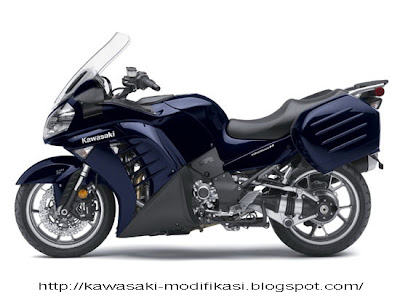
2010 Kawasaki Concours 14


2010 Kawasaki Concours 14 These are some pictures and wallpaper

Kawasaki Concours 14

Building on the continent-crossing performance of its predecessor, the 2010 Concours 14 incorporates new touring features and the latest rider support technology. Delivering both awesome supersport performance and comfortable long-distance touring potential, the Kawwasaki Concours 14 stands apart from its rivals.

More Technology and Refinement for This Multiple Award Winner

Performance touring comes naturally to Kawasaki, seeing as how we already had the performance part of the equation nailed with the incredible Ninja® ZX™-14 sportbike. That bike’s amazing 1,352cc engine and unique monocoque frame lent themselves perfectly to this exciting new class of transcontinental sport touring motorcycles, and the original Kawasaki Concours™ 14 and Concours 14 ABS rose immediately to the top of the critics’ lists just two short years ago. But the people who ride these motorcycles are not known for their patience. Two years on, the next-generation Concours 14 benefits from an entire laundry list of comfort, convenience and safety items carefully engineered to surpass all expectations of what a perfect sport tourer should be.

The biggest change is immediately apparent: All-new bodywork not only gives the new Concours 14 an even more aggressive demeanor, it’s also designed to channel more heat away from the rider for increased comfort. Meanwhile, a 2.75-inch taller, electric-adjustable windscreen creates a bigger still-air pocket for the rider and passenger, and new ducts above the instrument panel relieve the low pressure area behind the windscreen for an even smoother, quieter cruise. When the weather turns cooler, the new bike’s got your hands covered, with standard grip heaters that are easily adjustable via a control right next to the new, lockable storage compartment in the left inner fairing. Connoisseurs of fine cruising will note that all the redesigned body and trim pieces fit together with a level of precision and quality normally found on motorcycles costing thousands of dollars more.

The Concours 14 ABS’s chiseled new looks are backed up by a full complement of sophisticated new safety electronics. Second-generation K-ACT (Kawasaki Advanced Coactive-braking Technology) relies upon a powerful ECU to provide your choice of two modes of highly refined, linked anti-lock braking. And while the ABS sensors were already in place on the wheels, the Kawasaki Concours 14’s engineers used them as part of Kawasaki’s first-ever traction control system: KTRC (Kawasaki Traction Control) monitors any difference between the front and rear wheel speeds to help reduce wheelspin on slick surfaces, and provide extra piece of mind for the rider. (KTRC can of course, be easily switched on and off, at the rider’s discretion.)

The heart of the matter remains the same. The Motor Kawasaki Concours 14 engine generates prodigious torque down low, followed by an impressive mid-range surge that transitions into a top-end rush most open class sportbikes would envy. A big part of its tremendously wide powerband can be attributed to its variable valve timing (VVT) system. VVT automatically alters camshaft profiles according to rpm, to boost low-end and mid-range torque without sacrificing top-end power. Advanced fuel injection, sub-throttle valves, ram-air induction and decades of experience building the world’s most potent motorcycle engines add up to an amazing powerplant, a huge force to be reckoned with in the performance sport-touring segment.

Good thing the rest of the Concours 14’s running gear is up to the challenge. Its unique monocoque frame provides massive structural integrity along with excellent handling characteristics. Embracing the engine from on top, its compact structure keeps the bike narrow where it needs to be and allows optimum packaging of the bike’s vital systems. The Tetra-Lever shaft drive, which sends all that power rearward, uses a four-link design to offset the lifting and squatting tendencies of lesser shaft drive systems when the throttle is opened and closed, which results in true sportbike handling — and Tetra-Lever is almost completely maintenance free. The Concours 14’s powertrain has earned critical acclaim around the world for its silky smooth power delivery.

To that awesomely solid foundation we add a carefully sculpted saddle, all the creature comforts you’d expect and a pair of beautifully integrated, capacious, waterproof saddlebags — and away you go. An integrated high-speed touring machine with unquestionable supersport DNA, the Concours 14 and Concours 14 ABS are more ready to get you there than ever.

Building on the continent-crossing comfort and genuine sportbike performance of its predecessor, the second-generation Concours™ 14 includes new touring features and updated technology to advance the state of the sport touring art. The Concours 14 has earned rave-reviews from expert journalists and current owners who’ve experienced the otherworldly thrust and sublime composure of its Ninja® ZX™-14 based engine and chassis.

Already a showcase for the latest Kawasaki technology, the new Concours 14 ABS model adds a number of new systems designed to improve the riding experience. KTRC, Kawasaki’s first traction control system, helps provide peace of mind when negotiating slippery surfaces. K-ACT II selectable, sport-oriented coactive ABS complements the rider’s brake inputs with supplementary force enhancements for improved braking performance on a wide variety of riding surfaces.

Both versions include a number of upgrades, bodywork refinements and detail changes which vastly improve rider comfort, and make long-distance journeys even easier than before. A larger windscreen offers extra wind protection and new heat-dissipating bodywork provides better heat management. A number of additional new features, like heated handgrips, upgraded computer functions, a relocated glove box, and tank bag hooks offer added convenience and increase the Kawasaki Concours 14’s touring performance.

2010 Kawasaki Ninja ZX-14


Kawasaki appear with the latest innovations 2010 Kawasaki Ninja ZX-14

Ultimate Performance from Kawasaki’s Flagship Superbike

The mission of Kawasaki’s flagship Ninja® ZX™-14 is not unlike that of an exotic supercar
— to project the awesome power and technology of its parent company in rapid fashion, every time the throttle is twisted. It may not cost a million dollars or have a V-12 engine, but the ZX-14’s 1352cc fuel-injected inline-four is the closest thing on two wheels. Its monocoque chassis and wind-tunnel developed body represent the cutting edge of sportbike design. The ZX-14’s systems are designed to allow riders to exploit the full potential of man and machine, while effortlessly dispatching all challengers.

Despite ever-tightening noise and emissions regulations; the ZX-14 has continued to set the pace of sportbike excellence ever since its domineering debut. Intake and exhaust systems permit it to comply with strict emissions and noise regulations, even as its massive low-end torque, mid-range thrust and legendary Ninja peak power place it at the top of the sportbike food chain.

Secondary air ports in the cylinder head and its cover flow clean air into the exhaust system and boost the efficiency of the three honeycomb catalyzers employed in the exhaust system. These devices, combined with a wide dispersal of atomized fuel from the fine-atomizing fuel injectors and optimized flow characteristics through the intakes, allow the ZX-14’s 1352cc engine to offer strong performance, yet still meet the toughest motorcycle emissions regulations.

In lieu of a more-restrictive exhaust system, the Ninja ZX-14 meets noise standards by producing minimal internal mechanical noise. A special piston profile and a urethane insulation sheet on the inside of the magnesium chain cover help quiet the engine and permit a freer flowing exhaust for greater power.
Kawasaki Ninja ZX-14’s chassis design is every bit the equal of its power plant. Using an advanced version of Kawasaki’s unique aluminum monocoque design, its frame is lightweight and very strong. Die cast aluminum sections on the main frame make for lighter parts, keeping the weight down even more on the slim and compact frame.

The narrow engine, monocoque frame, and fuel tank provide a slim rider interface and a relaxed sport riding position. It is compact without being cramped, with its easy-to-reach bar position, low-set footpegs for ample legroom and a low seat height and narrow seat front to easily plant both feet on the ground when stopped. Comfort levels are high enough to cause riders to think they’re on a dedicated sport tourer — until the Ninja ZX-14’s throttle is twisted. When that happens, all confusion disappears, like so many competitors in the rear view mirrors.

Uninterrupted fairing lines give the Kawasaki Ninja ZX-14 a smooth, flowing appearance from front to rear, due in part to the monocoque frame, which goes over the engine and doesn’t protrude through the cowling. Quadruple projector beam headlights adorn the Kawasaki Ninja ZX-14’s front fairing, immediately beneath its menacing ram air intake duct. The turn signals are cleanly integrated into the fairing and rear cowl, with a unique “V” design LED tail lamp capping off a sleek, aerodynamic package that reinforces Kawasaki’s aircraft heritage.

The Ninja ZX-14’s blend of power, handling and style perfectly illustrates the potent technological know-how of Kawasaki’s highly-trained engineers.
Authentic Kawasaki Accessories are available through Kawasaki dealers.

Monday, April 12, 2010

Hyundau Cars-2011 Hyundai Sonata Hibryd

2011 Hyundai Sonata Hybrid Front Side View 2011 Hyundai Sonata  Hibryd

Together with the Hyundai Sonata 2.0 Turbo, Hyundai Sonata Hibryd release which is also equipped with GDI at the 2010 New York Auto Show. The Sonata Hybrid changing the game in hybrids with unique approaches in hybrid powertrain design, battery technology and vehicle appearance. This car is Hyundai’s first hybrid in the U.S. market.

Thursday, April 8, 2010

Hyundai Cars-Hyundai 2010

Hyundai is really stepping on the pedal of their hybrid business. This month, their first hybrid car running on petrol and electric power will be released in South Korea and will reach the United States by 2010.

Tuesday, February 2, 2010

Yamaha FZ8 StreetFighter Gallery and Informations

Yamaha FZ8 StreetFighter Gallery

That many anticipated FZ8 and Yamaha Super Tenere Yamaha sales will occur this summer according to the Yamaha.


Yamaha working hard to promote both bike with heavy-disguised picture showing the parts of both motorcycles and a new silhouette that shows Super Tenere Yamaha R1-style headlight.

Yamaha FZ8 StreetFighter Gallery

Yamaha officially launched the headlights of the FZ8 a few weeks ago but no further information came from Yamaha officially.

A Yamaha insider said: "FZ8 will appear at the end of this year together with Super Tenere that would be a good thing to boost interest in the new bike and the bike is expected to generate some significant sales in 2010."

No official estimated FZ8 has a smaller capacity four-cylinder version of the 998cc motor FZ1 - itself based on the five-valve Yamaha R1 engine from the year 2005.

FZ8 will replace the smaller capacity as a sporty model FZ6 naked middleweight, leaving the XJ6, XJ6 Diversion, and the new-for-2010 F XJ6 Diversion to satisfy beginners and versatile market.

This is the main rival will F800R BMW, Honda Hornet 600, Triumph Street Triple R and Aprilia shiver 750.

Super Tenere boxy silhouette shows off-road-style panniers, reinforcing evidence that the Yamaha bike will go head-to-head with BMW for the R1200GS, it does not involve more road-biased Ducati new Multistrada 1200.

Super Tenere technical highlights we already know about are:
- 3-mode ABS
- Shaft drive
- Associated brake
- Switchable engine maps
- Ride-by-wire throttle
- Traction control
- Side-mounted radiators

Wednesday, January 13, 2010

New Yamaha Byson 2010

New Yamaha Byson 2010

New Yamaha Byson 2010
Picture of New Yamaha Byson 2010


PT Yamaha Motor Kencana Indonesia or YMKI plans to unveil new sports product, Byson, in April 2010. This is because the earlier resignation had planned to release YMKI these products later this year.

"Just wait for four months from now," said the source from YMKI in Banyuwangi, Wednesday (2 / 12).

We have Yamaha Motor Manufacturing Indonesia (YMMI) has won a number type list numbers of motor vehicles produced in the Ministry of Industry 1195/IATT/TPT/11/2009 (Depperin) last November.

Manufacturers have proposed the amount of production to 80,000 units next year. Manufacturer bearing motor tuning fork will still carry the name for its newest product Byson. With the presence Byson, Yamaha fighting force in the national motorcycle market more robust, especially in the sports segment.

In India, this model is named after FZ and consists of several variants. This motor is more precisely a sports touring categories and engineered with the DNA Frazer.

Byson carrying 153 cc engines or larger than the V-Ixion, 149.8 cc. Of technology, the fuel supply system, V-Ixion more sophisticated, injection. While still relying Byson carburetor. Hence, the price is cheaper than expected V-Ixion.

FZ identity, or later transformed into Byson, using Monoshock suspension technology (Yamaha call monocross) with the special characteristics Muffler MidShip large. According to Yamaha, this design provides weight concentration of a better and efficient exhaust gas. Stable control for use in 140/60-17 rear tire.

Specifications Yamaha FZ (Byson)

MACHINE
Type

4 steps, SOHC, 2-valve, air conditioning
Capacity

153 cc
Diameter x step

58.0 x 57.9 mm
Comparison of compression

9.5: 1
Power max.

14 PS@7.500 rpm
Torque max.

14 Nm@6.000 rpm
Type carburetors

BS26
Chassis
The ratio of primary teeth and secondary

3.409 / 2.857
The size of the front and rear tires

100/80-17 & 140/60R17
Fuel tank capacity

12 liters
Dimensions: L x W x H (mm)

770 x 1975 x 1045
High saddle

790
Axle distance

1,335
Total weight

137 kg