Pages

Monday, June 14, 2010

2010 Hyundai Santa Fe beats competitors in terms of fuel consumption

The 2010 Hyundai Santa Fe SUV equipped with 2.2L four-cylinder diesel engine has been recognised as the most fuel efficient mid-size Sport Utility Vehicle in Australia.

During the week long Global Green Challenge, which crosses the continent from Darwin to Adelaide, the Santa Fe achieved an outstanding fuel consumption of 5.1L/100km and beat all of its rivals, including Kia's new Sorento crossover.
According to hyundai Australia, after seven days of intense competition, the 2010 Hyundai Santa FE consumed a total of just 160L of diesel and leaved only 137 grams of CO2 per kilometer.
The 2010 Hyundai Santa Fe is equipped with Hyundai's latest diesel engine, which produces 197 horsepower and achieves EURO5 emission standards. It is mated to the all-new six-speed automatic gearbox, which helps the vehicle to achieve such impressive fuel consumption ratings as mentioned above.
But, this is not the very first "green competition" win for Hyundai brand in Australia. At the World Solar Challenge event two years ago, Hyundai also beat its competition with its brandnew i30 hatch and an astonishing 3.2L per 100 kilometers consumption. Under the hood, the i30 featured a 1.6L diesel engine from Hyundai, which is recognized as one of the best diesel engines in the segment.

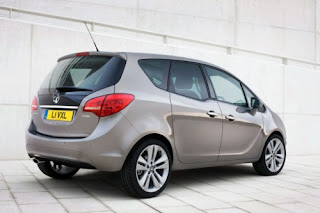
New Opel Meriva to rival future Hyundai i20 mini-MPV

Future Hyundai i20 mini-MPV facing strong competition from Opel Meriva rival!


Opel has released the very first photos of the all-new Meriva mini-MPV ahead of it official unveiling. The all-new Meriva is scheduled to make its official premiere at the upcoming Geneva Auto Show in March.

The all-new Opel Meriva is one of the most successful vehicles in the mini-MPV segment. Over the past few years, it was also the best selling vehicle in the segment, which has been gradually expanding with new models from different brands.

One of the latest mini-MPV models that joined the battle for young European families is the brand-new Kia Venga. Kia Venga might be the first attempt of South Korean's second largest carmaker to lure younger families to the showrooms, but its a very solid car with nice design and modern powertrain technology.

But Venga is not the last mini-MPV coming from a Korean carmaker! Hyundai has already announced it is working on a similar model, which will use Venga's powertrain technology, including engines, platform and transmissions.

Dubbed the i20 mini-MPV, the model is expected to be marketed in Europe only. It will be built alongside Kia Venga at Hyundai's European manufacturing plant that has a capacity tp build 300.000 new vehicles per year.

There are no images of the upcoming Hyundai i20 mini-MPV on the web at the moment, but we are expecting to see at least some teaser shots released by Hyundai ahead of Geneva Motor Show. With new models, such as mini-MPV, Hyundai sales in Europe is expected to grow significantly in 2010.

Gallery: Hyundai i20 mini-MPV vs. 2010 Opel Meriva


Hyundai to produce electric cars together with KEPCO


Hyundai and the Korea Electric Power Corp. yesterday signed a memorandum of understanding on developing electric vehicles and recharging mechanisms.
As part of the agreement, the two companies will collaborate in developing electric vehicles and the charging mechanisms, as well as developing and standardizing recharging interfaces, while also commercializing the electric vehicles. KEPCO is currently developing recharging mechanisms with the target of completing the process by 2010.
Hyundai-Kia Automotive Group's electric car plans aim to supply electric vehicles in limited volumes in August 2010 and to begin commercial production of such vehicles the following year.
Hyundai will soon reveal more detailed plans regarding its electric car program. Stay tuned!

Sunday, June 13, 2010

Hyundai to shift part of i20 production from India to Europe

Hyundai shifts a part of i20 production from India to Europe.

Hyundai Motor Company decided to shift part of its compact i20 car production from India to Europe. The Korean carmaker operates a production plant in Czech Republic, however Hyundai announced it will shift i20 production to its other European plant, located in Turkey.

The i20 production is shifted to Europe due to an increased demand from European consumers.

According to Arvind Saxena, director at Hyundai Motor India, the European demand for Hyundai i20 is growing and it is not possible for the company to supply enough cars from one plant alone. Therefore, Hyundai decided to shift a certain part of the i20 production to Turkey.

Hyundai expects to sell 40.000 units of i20 hatchback in Europe during the next 12 months, while sales is expected to increase to 70.000 units in 2011.

By relocating a part of i20 production from India, Hyundai will free up capacity for the all-new small car, which is currently still under development. The new model is said to be smaller and cheaper than the current i10 hatchback.

According to Arvind Saxena, the all-new small car from Hyundai is still in the early process of car development, so it will take the company at least a year and a half before it can bring it to the market.

Hyundai Mobis is growing fast

Hyundai Mobis, the world's fastest growing auto parts maker, is eyeing to become the fifth largest car parts making company in the world by 2020!

In the beginning, Hyundai Mobis has been specialized in shipping container production, but later the company reorganized itself to become a specialized automobile parts maker, supporting the Hyundai-Kia Automotive Group.

To fuel a significant part of the planned growth, Mobis is now looking to win contracts from other automobile makers.

We have already reported in September that Mobis set a record for Korea's auto parts industry when it won the largest parts supply contract ever won by a local parts maker. Mobis has won a $2 billion contract to supply chassis modules to Chrysler, which will be used in the new models of Dodge Durango and Jeep Cherokee.Both model will go into production by the end of 2010.
In addition, Hyundai Mobis also secured a three-year contract from BMW to supply rear lamps that will be used in BMW's 1-series. According to latest news from Korea Herald, Hyundai Mobis also won a contract from U.S. General Motors, to supply it with park brakes destined for future Cadillac cars. Both orders are worth around $90 million!

2009 Hyundai Genesis Coupe Concept

Hyundai unveiled its highly anticipated Concept Genesis Coupe during a press conference at the Los Angeles International Auto Show. The concept car heralds the introduction of an all-new, rear-wheel drive 2 + 2 sports coupe scheduled to join the Hyundai lineup in the spring of 2009. Following the introduction earlier this year of the Concept Genesis sedan, Concept Genesis Coupe signals Hyundai’s second step in broadening its appeal to driving enthusiasts.
read the rest entry here :


2009 Hyundai Genesis Coupe Concept-hybrids cars

Friday, June 11, 2010

Korea Hyundai Group to build vehicle aembling factory in Cambodia: ambassador

Hyundai Company of South Korea will build a vehicle assembling factory in Cambodia, South Korean ambassador to Cambodia said on Wednesday.
"The vehicle assembling factory will be opened in coastal Koh Kong Province," Lee Kyung Soo, South Korean ambassador here told reporters in a news conference on the state visit of South Korea president Lee Myung Bak to Cambodian on Oct. 22-23.
The press conference is organized by the club of Cambodian Journalists.
But Lee Kyung Soo did not give the details about the amount invested by Hyundai in Cambodia. Deputy Director General of Hyundai Group already paid a visit to Cambodia a few days ago, LeeKyung Soo said.
The press release from South Korean Embassy in Phnom Penh said that Camko Motor Company is building a Hyundai car assembly factory in Koh Koh province, about 370 km southwest of capital Phnom Penh. It covered land area of 165,000 square meters with two facilities for maintenance and dormitory. It can assemble 3,000 cars per year and the type of car including SUV, Van and other cars.

According to Lee Kyung Soo, South Korea's investment in Cambodia last year was worth about 1,238 million U.S. dollars, but for the first six months of this year, the investment decreased about 58 percent compared with the same period of last year because of the global financial crisis. South Korea's investment in Cambodia focuses on the rubber plantation, mines, energy, oil and gas, real estate, tourism, construction, agri-industry, Lee Kyung Soo said.
For the bilateral trade between the two countries in 2008, Cambodia imported about 309 million U.S. dollars worth of products from South Korea and Cambodia's export to South Korea about 294 million U.S. dollars. So far this year the two-way trade volume is worth about 120 million U.S. dollars. Both sides will try to foster more trade volume, Lee Kyung Soo said.